A A
RSS

Lard Is Healthy?

Sun, May 18, 2008

Culinary News

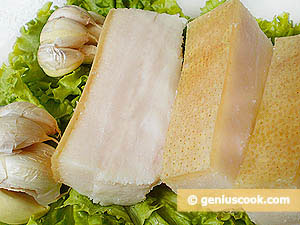
LardThe latest studies amazingly show that lard isn’t harmful, as it was thought, but healthy! The lard contains the arachidonic acid that relates to polyunsaturated fatty acids (Omega-6). Omega-6 is part of heart, brain and kidney tissues and essential for their proper functioning. The lard has anticancer effect as the most of carcinogens dissolve in fatty acids. As the arachidonic acid can improve metabolism and dissolve cholesterol, the lard helps remove toxins form our body and lowers blood cholesterol level. To achieve named health benefits, it is best to eat lard with garlic. Both garlic and lard are a good source of selenium, and selenium is what we need to strengthen the immune system. The lard also contains saturated acids that are vital to our health.

Lard Health Benefits

  • The lard is effective for the treatment of lung diseases.
  • Bile-expelling properties of the lard make it a good remedy for liver disorders.
  • The lard also prevents atherosclerosis.
  • The lard does not accumulate radionuclides and parasitic worms can’t live in it.
  • Even small amount of lard is very nourishing. So it can help you eat less and keep a slim figure. You can even find some lard-based diets out there.

How Ukrainians Eat Lard

The lard is a national Ukrainian food. Ukrainians eat the lard regularly, but they are not less healthy than people in other countries and they also don’t have nationwide obesity problem. As with other food, only rational consumption of lard is healthy.

  • 100 g lard supplies: 640 kcal, 6%proteins, 67%fat.
  • The lard contains vitamins A, E, the B vitamins, PP and selenium.

Note: Guideline amount of lard is about 100 g weekly.
Note: Guideline amount of lard is about 100 g weekly.
Tags:

, ,

Share this post:

  • del.icio.us
  • Propeller
  • MyShare
  • Digg
  • MisterWong
  • Technorati
  • Reddit
  • Netvouz
  • DZone
  • ThisNext
  • Wists
  • Bumpzee
  • Google Bookmarks
  • LinkaGoGo
  • LinkedIn
  • StumbleUpon
  • Live
  • Mixx
  • MySpace
  • Webride
  • NuJIJ
  • PlugIM
  • Webnews.de

Other News

4 Comments For This Post

  1. ToddC Says:

    I know this from personal experience, as I’ve been rendering my own lard for almost a year now because it’s very hard to find available for purchase in form that hasn’t been hydrogenated. In the past two years I’ve changed my diet drastically. Heavy in plants and whole grains, dairy makes up a fair amount and is always organic full fat product, actual meat intake is low (perhaps 3/4lb a week including fat used in cooking/baking) and also always organic. Fat, as in olive oil, butter, and lard, I use liberally. Two years ago, I did not eat much of anything that wasn’t pre-packaged or restuarant made. I was in poor health. Now I prepare almost everything myself, paying attention to the raw source of the food I eat. While I do now move quite a bit more than I did, turns out I am doctor certified in the best health I’ve been since I was a teenager. No cholesterol issues at all (or anything else), which I can tell you would not be what one would suspect if you listened to common wisdom about fats.

  2. Yen Says:

    I heard a lot of news how animal fat is bad for you, and we have to eat non-fat this and that. My grandma cooks with lard all her life. She never skims any fat, pork belly, chicken skin, you name it. She’s never had any health problems and she’s now 85 yrs old. Her cholesterol is even better than my Mom’s. But my grandma doesn’t eat junk food like we do :D and she eats everything in moderation. She cooks everything from scratch, only sometimes used canned veg/fruits (cause it’s not available fresh).

  3. Danny Says:

    This is not lard. The Ukrainians’ national food is salted pork fat, known as fatback in the United States. Lard is fresh, unsalted, rendered pork fat, and is used nowhere as extensively in Ukrainian cooking as it is in, say, British cooking. I somehow doubt that “carcinogens dissolve in fatty acids”, although, of course, the fears of good, natural saturated fats are ridiculous. It’s just good eatin’.

  4. Jeff Says:

    I read an article about skin cancer in Mexico was virtually unknown. In the large cities that have been influenced by American TV lard used dropped. As it did incidents of skin cancer began to rise but in rural areas in Mexico where lard is still widely used incidents skin cancer did not rise.

    Lard was widely used in America in the 1800’s. In 1900 heart disease and heart attacks was virtually unknown. So much so that the average doctor didn’t know how to treat heart disease that year.

    In 1930 the population of the US was 123,000,000. There were 3000 heart attack deaths that year. Which means the odds of dying of a heart attack was 42,000 to 1. Not too shabby.

    In 1960 the population of the US was 197,000,000. That year 500,000 Americans died of heart attacks: Odds? 3500 to 1.

    From 1930 to 1960 everyone was switching from lard & butter to margarine, vegetable oils & skim milk.All “heart healthy” choices. As a result we started dying like flies.

    Dr. Paul White, who treated Eisenhower when he had his heart attack, started his practice in 1910. He didn’t treat his first heart disease patient until 1921. That’s 11 years!!! There isn’t a doctor in America today who can go 11 days without treating a heart disease patient.

    If we want to reverse heart disease in America today we need to return to the foods & diet that our ancestors were consuming back in the 1800’s. Pass the lard, please.

    Jeff

1 Trackbacks For This Post

  1. Pork Fat, Sadlo, Shortening, Lard « Pragensismac Says:

    [...] snack on). And as for the “simple and natural” side of the argument, it seems that more and more, the old ways might have been the better ways, at least in terms of [...]

Leave a Reply

Recent posts

  • The “Two Valentine Lovers” Salad with Shrimps, Caviar and Cheese

    The “Two Valentine Lovers” Salad with Shrimps, Caviar and Cheese
  • Doughnuts with Chocolate for Valentine’s Day

    Doughnuts with Chocolate for Valentine’s Day
  • How to Make Asparagus with Eggs and Cheese

    How to Make Asparagus with Eggs and Cheese

Ad Links